Fragmented value chains
Producers, SMEs, processors, laboratories, logistics providers and buyers operate without a dependable shared commercial pathway.
Kenya–Europe market systems consortium
AfriEuro Links is a 36-month export accelerator that connects regenerative cotton, responsible fashion, renewable-oilseed and rural enterprise pathways to quality systems, digital traceability and structured markets.
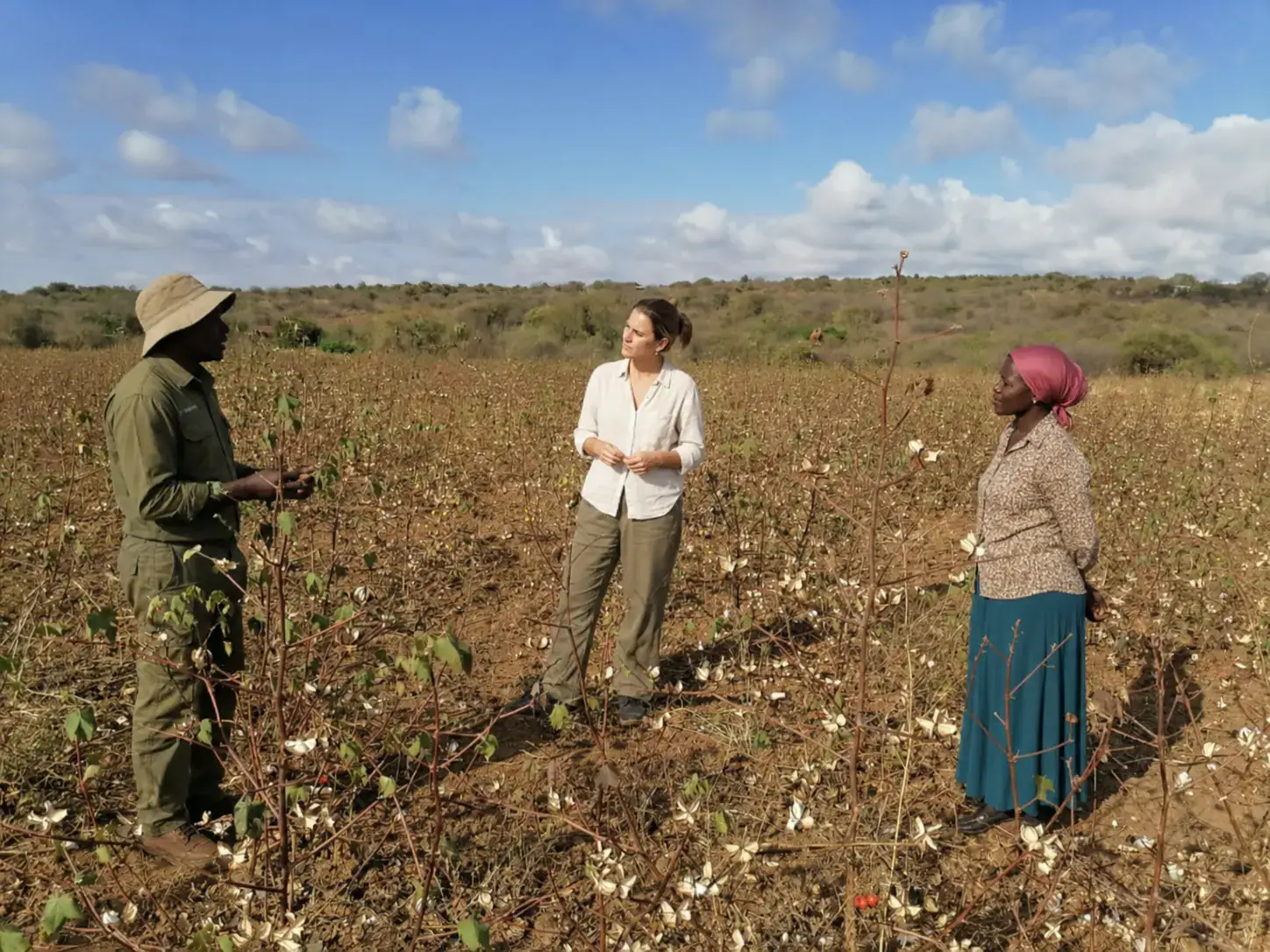
Introducing AfriEuro Links
Farmers and rural SMEs can produce valuable goods and still remain excluded from higher-value markets when aggregation, standards, evidence and buyer relationships are fragmented. AfriEuro Links brings those functions into one coordinated operating model.
Labl Group East Africa Ltd is the lead applicant and market anchor. The programme begins in Taita Taveta and Kilifi Counties, validates a Kenya-based model and prepares a responsible replication route across other counties and, later, East Africa.
The problem
Buyers need predictable supply, standards, traceability and accountable counterparties. Farmers and SMEs need practical support, fair terms, working records and dependable routes to customers.
Producers, SMEs, processors, laboratories, logistics providers and buyers operate without a dependable shared commercial pathway.
Standardisation, testing, chain of custody, certification readiness and transaction evidence are often too costly or inaccessible for smaller participants.
How it works
Every stage has clear owners, evidence and decision gates. Participation does not imply guaranteed grants, purchases, income or certification.
Community entry, voluntary registration, consent, eligibility, cluster charters and grievances.
Regenerative agronomy, crop diversification, food-security safeguards and extension.
Buyer-led specifications, internal controls, inspection, testing and certification readiness.
Permissioned records for people, farms, lots, quality, custody, contracts and payments.
Samples, buyer due diligence, contracts, pilot consignments, logistics and evidence.
Cost recovery, local capability, platform handover and replication only after proof.
Three-year ambition
Targets remain subject to baseline confirmation, buyer demand, regulatory requirements, safeguards and the capacity to serve participants responsibly.
farmers registered and linked
participating rural SMEs
producer and enterprise clusters
farmers supported toward compliance
structured off-take agreements
target cumulative transactions
Inclusion target: at least 50% women farmers, 35% youth and 40% women- or youth-led participating SMEs.
Consortium
Commercial participants, service providers, public partners and regulators are identified according to their actual roles. Regulators remain independent competent authorities.
Lead applicant: governance, cotton-to-fashion market pathway, financial accountability, digital product ownership and buyer development.
Visit partner ↗
Leads renewable-oilseed and biodiesel-feedstock feasibility, trials, safety, quality and market development, subject to approvals.
Visit partner ↗
Leads community inclusion, safeguarding, training, financial literacy and controlled administration of approved community-support funds.
Visit partner ↗
Contracted specialist for requirements, architecture, development, cybersecurity, testing, deployment, training and support.
Visit partner ↗
Registration and onboarding support under Goblis Foundation: documentation, mapping, consent and field-record verification.
Visit partner ↗Netherlands-based shareholder relationship and first European gateway for brands, product feedback, logistics, market intelligence and financing conversations. It uses the shared Labl identity and logo.
Visit Labl Fashion Group B.V. ↗County Governments of Taita Taveta and Kilifi; the national ministries responsible for agriculture, trade and energy; AFA, KALRO and KEPHIS; and NEMA, EPRA, KEBS, DOSHS and other competent authorities according to their mandates. Reference to an institution does not imply funding, endorsement, exemption or prior approval.
Why “Euro”?
Labl Group East Africa is connected to Labl Fashion Group B.V. in the Netherlands. That relationship creates an initial European base for brand conversations, product feedback, logistics and investment engagement—but AfriEuro Links is designed for the wider European Union, not a single country or buyer.
The EU–Kenya Economic Partnership Agreement entered into force on 1 July 2024. It creates immediate duty- and quota-free EU market access for Kenyan goods except arms, subject to product, origin, customs and destination requirements, while embedding labour, gender, environmental and climate commitments. AfriEuro Links invests in the quality, evidence and buyer relationships required to use that opportunity responsibly.
Funding appeal
The consortium seeks KES 138 million for January 2027–December 2029. Euro figures are indicative donor references using the Central Bank of Kenya rate of KES 147.56 per euro published on 22 July 2026.
| Programme component | KES | Indicative EUR |
|---|---|---|
| Inception, baseline, market validation and regulatory planning | 8,000,000 | €54,215 |
| Community mobilisation, registration and cluster governance | 16,000,000 | €108,430 |
| Agronomy, diversification, food security and extension | 18,000,000 | €121,984 |
| Standards, quality assurance, testing and certification readiness | 19,000,000 | €128,761 |
| Digital platform development and deployment | 25,000,000 | €169,423 |
| Demonstration, processing trials and compliance | 12,000,000 | €81,323 |
| Buyer linkage, export readiness and transactions | 10,000,000 | €67,769 |
| Inclusion, enterprise support and community grants | 10,000,000 | €67,769 |
| Monitoring, evaluation, learning and replication | 7,000,000 | €47,438 |
| Consortium coordination, finance, audit and overhead | 13,000,000 | €88,100 |
| Total | 138,000,000 | €935,213 |
The programme budget is controlled in Kenyan shillings. Euro values reduce friction for European donors but are not fixed exchange guarantees. The receiving and intermediary banks apply their rates and fees on the transfer date.
Why Goblis Foundation receives funds
Goblis Foundation is the consortium’s community-development, inclusion and capacity-building partner. The appeal supports community mobilisation, training, safeguarding, registration, shared-market assets, inclusion and milestone-based community initiatives—not unrestricted commercial income for a private company.