Labl Farms
County- and crop-specific farmer engagement, agronomy and responsible production.
Crostar Energy pathway
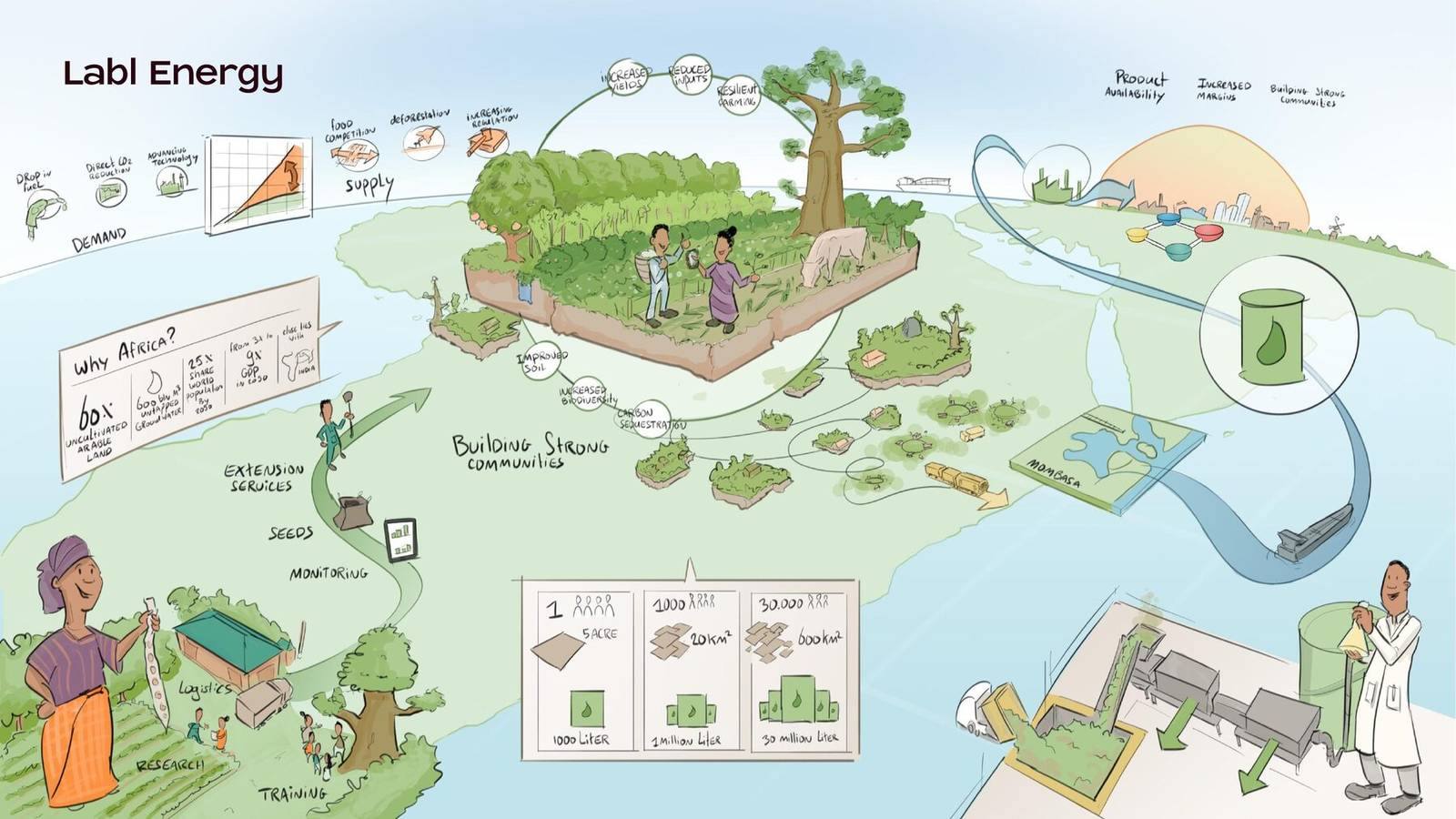
Crostar Energy leads the technical and commercial biodiesel pathway. Labl Farms supports approved farmer-facing agriculture, while the Labl digital system can connect consented field, lot, quality and custody records.
Clear accountability
Crostar Energy is responsible for feedstock qualification, used-cooking-oil collection, processing design, technical and commercial feasibility, fuel quality, safety, environmental compliance and market development. Labl Farms leads any approved oilseed farmer engagement and agronomic research. Shared records may be supported by the Labl digital operating system.
County- and crop-specific farmer engagement, agronomy and responsible production.
Permissioned records for participants, plots, lots, custody, quality and transactions.
Feedstock aggregation, extraction, conversion feasibility, standards, safety and biodiesel markets.
Domestic, regional or export route only after approvals, specifications and viable economics.
Potential inputs
No crop or waste stream is automatically sustainable. Every route must protect food security, land and water rights, biodiversity, farmer economics and legal compliance.
A ginning co-product with potential oil value where quality, volumes and economics are viable.
Non-food oilseed options requiring local agronomic, toxicity, handling and land-use assessment.
Potential feedstocks subject to suitability, yield, market and environmental evidence.
A complementary waste-recovery stream requiring lawful collection, contamination control and custody records.
The process
Each stage must pass technical, environmental, social, safety, legal and commercial checks. Progress at one stage does not guarantee approval of the next.
Assess crop or waste-stream origin, land and food-security risk, expected volume, contamination, economics and legal route.
Use approved agronomy for oilseeds or controlled collection agreements for used cooking oil, with consent and source records.
Receive, weigh, identify, inspect and segregate lots; record custody, supplier, location, date and basic quality information.
Clean and condition seed or pre-treat recovered oil. Reject unsuitable, unsafe or untraceable material.
Use appropriate mechanical or approved extraction systems for oilseeds; manage press cake and other co-products safely.
Laboratory-test key oil properties and contaminants to determine whether the feedstock is suitable for a validated conversion route.
Under engineered controls, convert qualified oils through the selected biodiesel process, commonly transesterification, producing biodiesel and a glycerol-rich co-product.
Separate, recover and responsibly manage process inputs and co-products; wash or polish and dry the fuel as required by the validated design.
Test the finished fuel against the specification required for its intended market, blend and use. Non-conforming product is isolated.
Use approved tanks, labelling, fire controls, transport, records and licensed market channels; retain batch and customer evidence.
Decision gates
The pathway is designed to prevent premature scale, unverified sustainability claims and unsafe or non-compliant production.
Responsible delivery
Renewable origin alone does not make a fuel responsible. The programme must evaluate the full route, including unintended impacts and who carries the risk.
No automatic conversion of food land; use documented land rights, crop suitability and food-security checks.
Clear terms, transparent weights and prices, safe handling, training, protective equipment and grievance routes.
Avoid sensitive ecosystems, measure water needs and use locally appropriate soil and biodiversity safeguards.
Engineered storage, competent supervision, separation, ventilation, spill response and emergency systems.
Define lawful, safe and commercially credible uses or disposal routes before production.
Make climate or sustainability claims only from a documented boundary, credible data and appropriate verification.
Ways to participate
Potential collaborators include agronomists, farmer organisations, waste-oil aggregators, laboratories, equipment providers, safety specialists, universities, county institutions, financiers, fuel buyers, logistics providers and traceability partners.