Employment
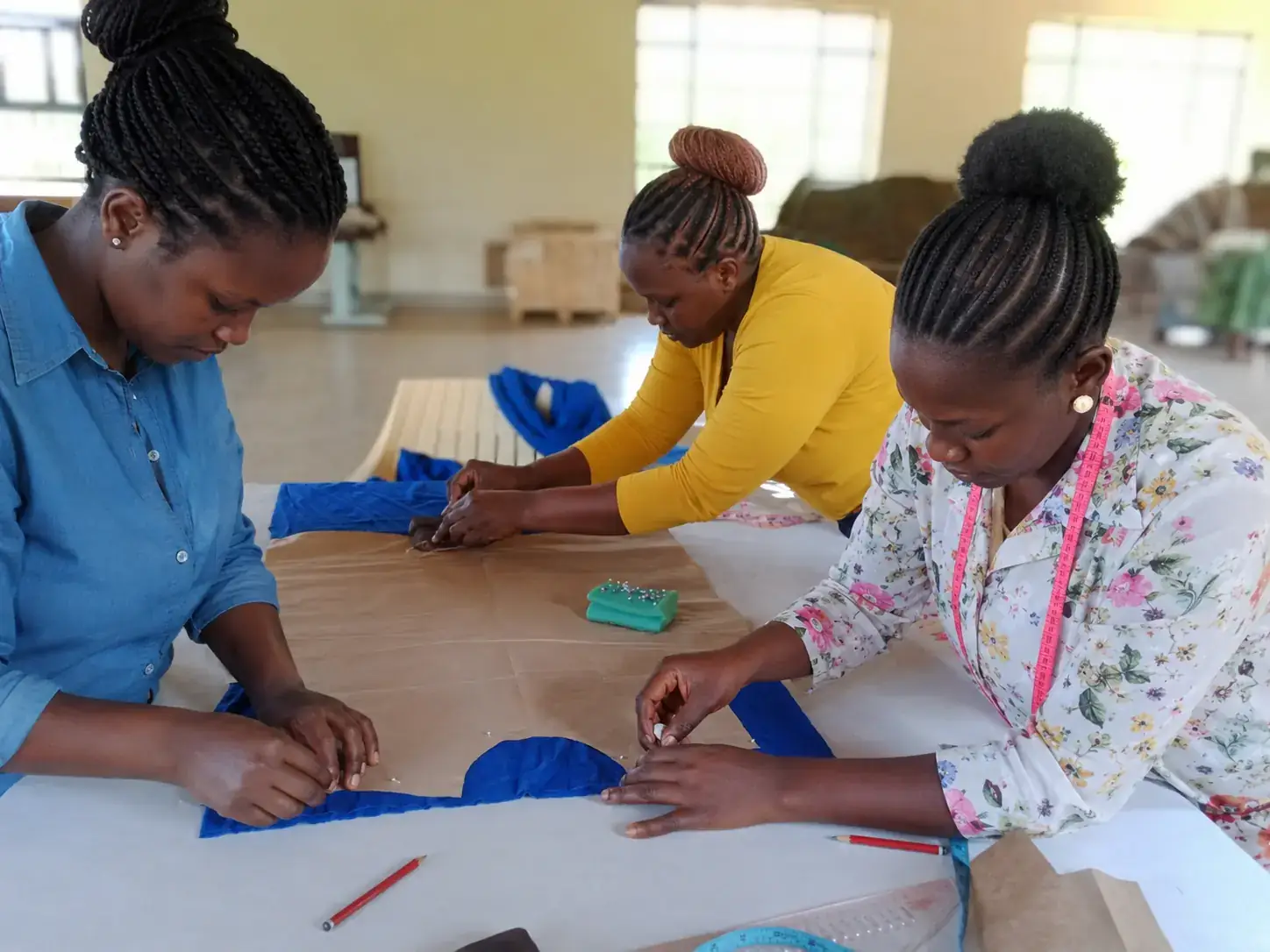
Sewing, cutting, quality, stores, safety, maintenance, planning, finance, sales, digital and field roles.
Opportunity across the value chain
Labl’s model creates pathways for workers, women, youth, farmers, enterprises, brands, researchers, investors and institutions—linked to real operating demand and measurable benefit.
Opportunity map
Opportunities open in phases and depend on approved budgets, demand, safety, capacity and transparent selection. A future pathway is not a promise of immediate recruitment or procurement.
Sewing, cutting, quality, stores, safety, maintenance, planning, finance, sales, digital and field roles.
Work-based learning, supervised practice, production competencies and routes into employment.
Regenerative cotton, organic dyes and suitable diversified crops through Labl Farms from 2027.
Transport, food, hospitality, repair, tools, aggregation, creative services and local supply.
Product development, responsible sourcing, smaller batches, institutional orders and verified market links.
Field trials, laboratories, curricula, internships, textile innovation, ecology and digital research.
Offline-first field tools, data quality, cybersecurity, integrations, QR circularity and user support.
Community projects, working capital, equipment, county expansion, certification and digital development.
Women and youth
Location alone does not create inclusion. Labl will use fair recruitment, safe facilities, anti-harassment systems, worker voice, accessible training, leadership pathways and attention to care, mobility, land, asset and digital-access barriers.
Orientation, foundational skills, financial literacy and recognised competencies.
Transparent terms, timely payment, safe work and viable enterprise economics.
Supervision, technical specialisation, leadership, entrepreneurship and market access.
Grievance, safeguarding, worker voice and community feedback mechanisms.
Voluntary savings habits, separately governed cooperative pathways and stronger businesses.
Participant feedback and disaggregated evidence influence design and resource allocation.